Table of Contents
- What Is Vjosa National Park?
- How Vjosa National Park Was Created
- Why Vjosa National Park Is Unique in Europe
- Wildlife and Biodiversity
- Top Activities in Vjosa National Park
- Rafting — The Best Way to Experience the Park
- Hiking Trails and Nature Walks
- Conservation and Why It Matters
- How to Visit Vjosa National Park
- Frequently Asked Questions
What Is Vjosa National Park?
Vjosa National Park is Europe’s first and only Wild River National Park, established in 2023 to protect the Vjosa River — the last major free-flowing river on the continent. Stretching across southern Albania, Vjosa National Park encompasses over 12,727 hectares of pristine wilderness, dramatic canyons, and untouched river ecosystems.
The creation of Vjosa National Park was a landmark moment for European conservation. For the first time, an entire river system — from its Albanian source to its meeting with the Adriatic Sea — received full national park protection, ensuring that the Vjosa will remain wild and undammed for generations to come.
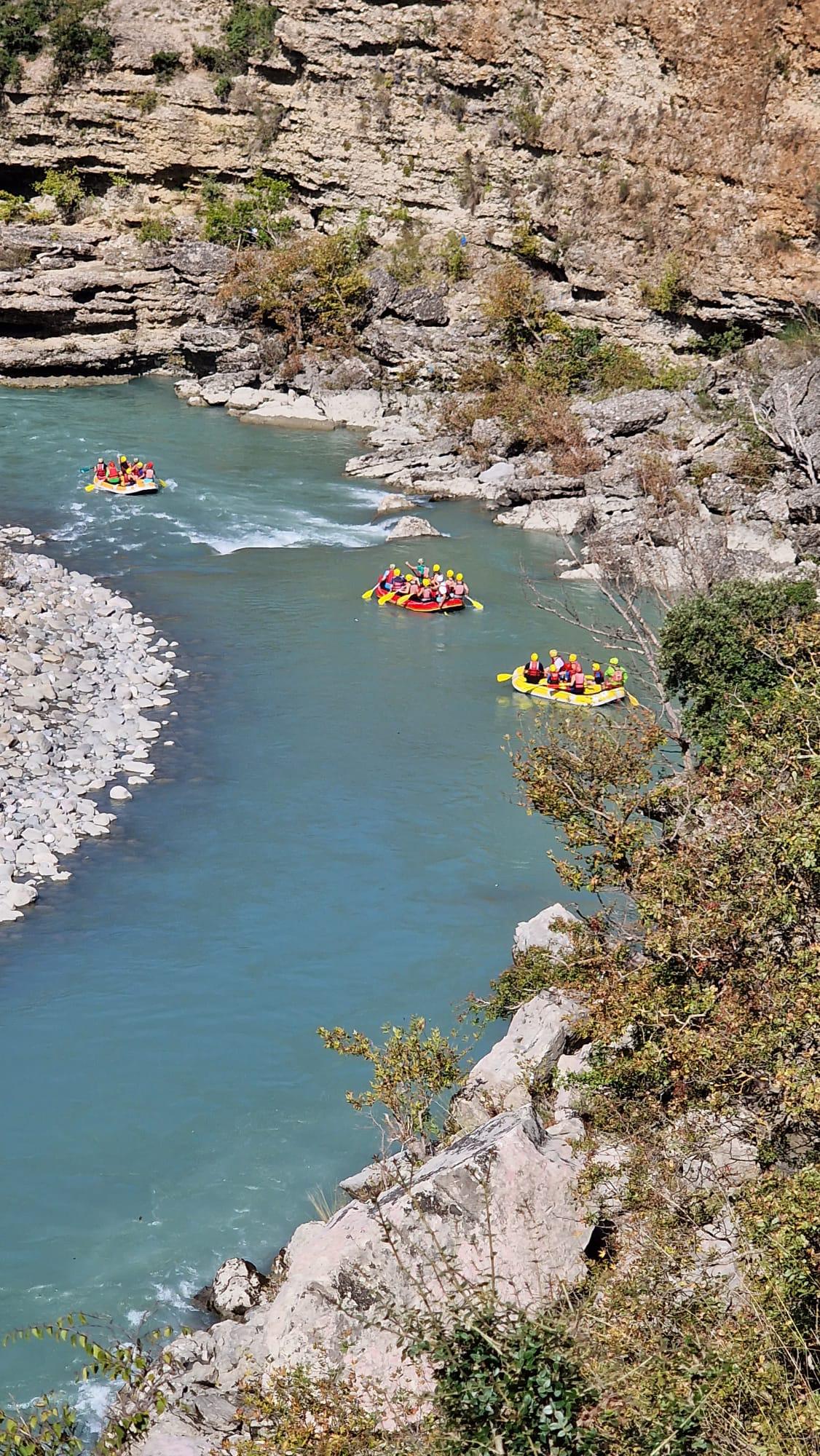
Today, Vjosa National Park is rapidly becoming one of the most exciting natural destinations in Europe, attracting adventurers, nature enthusiasts, and conservation-minded travelers from around the world.
How Vjosa National Park Was Created
The story of Vjosa National Park is a remarkable tale of environmental activism and political courage. For years, the Vjosa River faced threats from proposed hydropower dam projects that would have destroyed its free-flowing character forever.
An international coalition of environmental organizations, local communities, scientists, and celebrities campaigned tirelessly to save the river. Their efforts culminated on March 15, 2023, when Albanian Prime Minister Edi Rama officially declared the Vjosa Wild River National Park — a historic first for Europe.
The designation protects the main river channel plus its major tributaries, banning dam construction, mining, and industrial development throughout the park boundaries. Vjosa National Park represents a new model for river conservation that other European countries are now studying as a template.
International Recognition
Since its creation, Vjosa National Park has received widespread international praise. Environmental organizations including the World Wildlife Fund (WWF), Patagonia, and EuroNatur have celebrated the park as a major conservation victory. The designation has also boosted Albania’s profile as a sustainable tourism destination.
Why Vjosa National Park Is Unique in Europe
Vjosa National Park stands apart from every other protected area on the continent. Here is what makes it truly one of a kind.
Europe’s Last Wild River
The Vjosa is the only major river in Europe that flows completely free from source to sea without a single dam. Every other comparable river on the continent has been altered by human infrastructure. This makes Vjosa National Park the only place where you can experience a truly wild European river ecosystem — rapids, floodplains, braided channels, and natural sediment flows all functioning exactly as nature intended.
A Living Laboratory
Scientists consider Vjosa National Park a priceless natural laboratory. The undisturbed river provides a baseline for understanding how European rivers functioned before industrialization. Researchers from universities across Europe study the Vjosa’s hydrology, ecology, and geology to inform river restoration projects throughout the continent.
Extraordinary Geological Features
The river has carved spectacular canyons through limestone bedrock over millions of years. Within Vjosa National Park, canyon walls rise dramatically on both sides of the river, exposing geological layers that tell the story of the region’s ancient past. Folded sedimentary rock, eroded caverns, and cascading side streams create a landscape of extraordinary beauty and scientific interest.
Wildlife and Biodiversity in Vjosa National Park
Vjosa National Park is home to an astonishing diversity of life. The undisturbed river and surrounding habitats support species that have disappeared from most of Europe’s waterways.
Key species found in Vjosa National Park:
- Over 1,100 animal species have been documented within the park boundaries
- More than 1,500 plant species thrive in the diverse habitats
- Fish: Native trout, barbel, and chub populate the river’s clear waters
- Birds: Golden eagles, Egyptian vultures, herons, kingfishers, and numerous songbirds
- Mammals: Eurasian otters, wild boar, wolves, and brown bears inhabit the surrounding forests
- Reptiles and amphibians: Several rare and endemic species found nowhere else in Europe
The river’s exceptional water quality — crystal clear with visibility extending several meters — supports aquatic life that has vanished from polluted and dammed rivers elsewhere. Snorkeling in the calm sections of Vjosa National Park reveals an underwater world teeming with life.
Top Activities in Vjosa National Park
Vjosa National Park offers a range of outdoor activities that allow visitors to experience the wild river and its surrounding landscapes in different ways.
River Activities
- Whitewater rafting: The most popular way to experience Vjosa National Park — guided trips through the canyon with Class II-III rapids
- Swimming: Crystal-clear natural pools throughout the park provide perfect swimming spots during summer months
- Kayaking: Experienced paddlers can explore sections of the river independently
Land Activities
- Canyon hiking: Multiple trails follow the river and its tributaries through dramatic gorges
- Birdwatching: The park is a haven for bird enthusiasts with diverse raptor and waterbird populations
- Photography: The turquoise waters, canyon walls, and wildlife provide endless photographic subjects
- 4×4 exploration: Off-road tours access remote areas of the park and surrounding mountains
Cultural Activities
- Village visits: Traditional Albanian villages within and around the park offer cultural immersion
- Local cuisine: Farm-to-table dining featuring regional specialties and organic produce
- Thermal baths: Natural hot springs at Benja, near the park entrance, provide post-adventure relaxation
Rafting — The Best Way to Experience Vjosa National Park
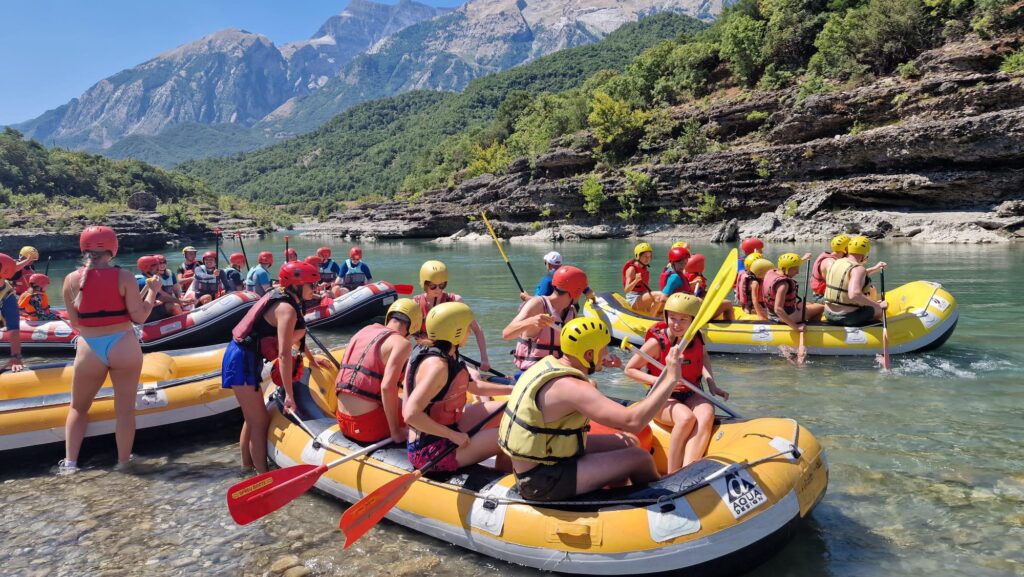
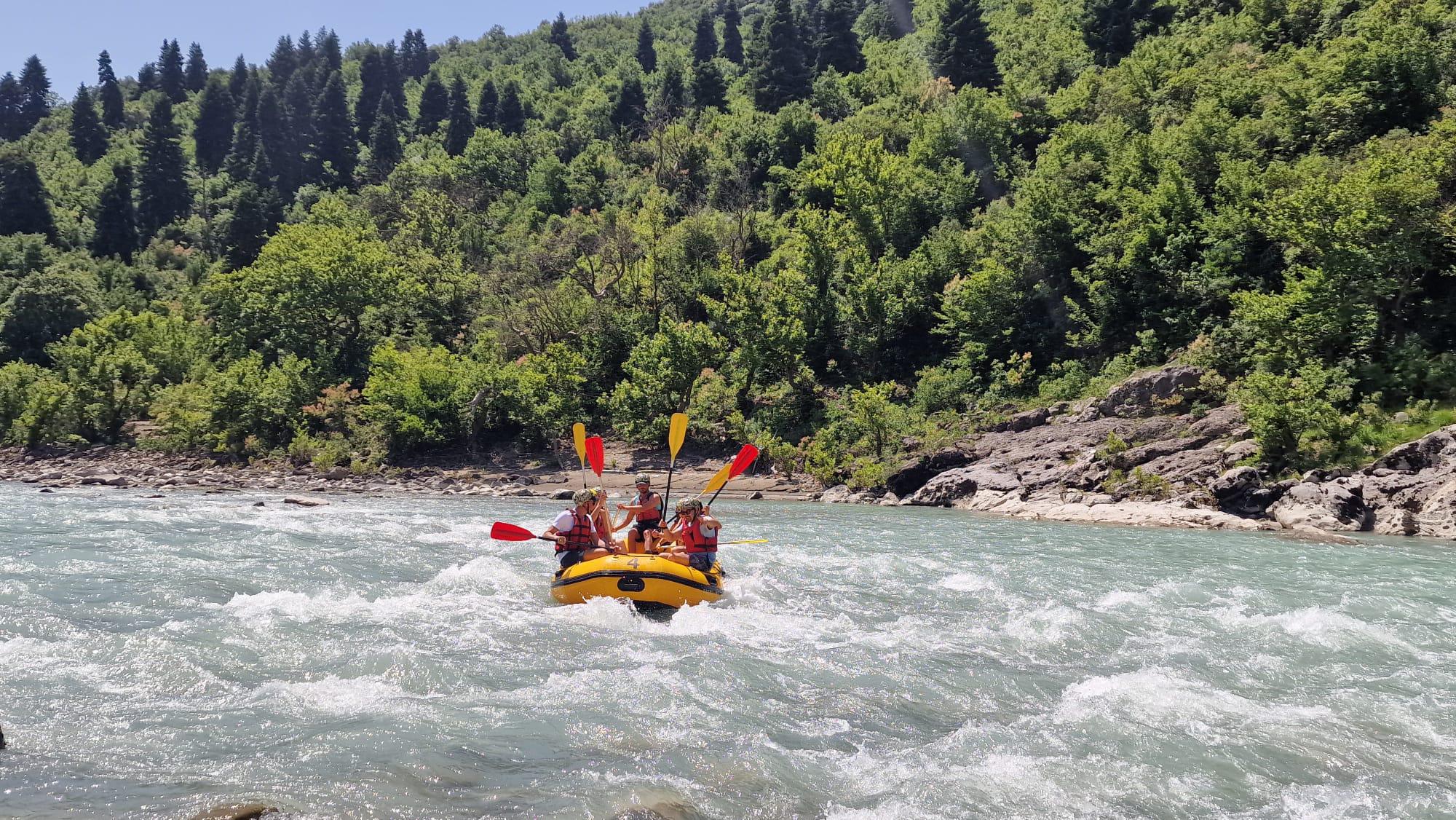
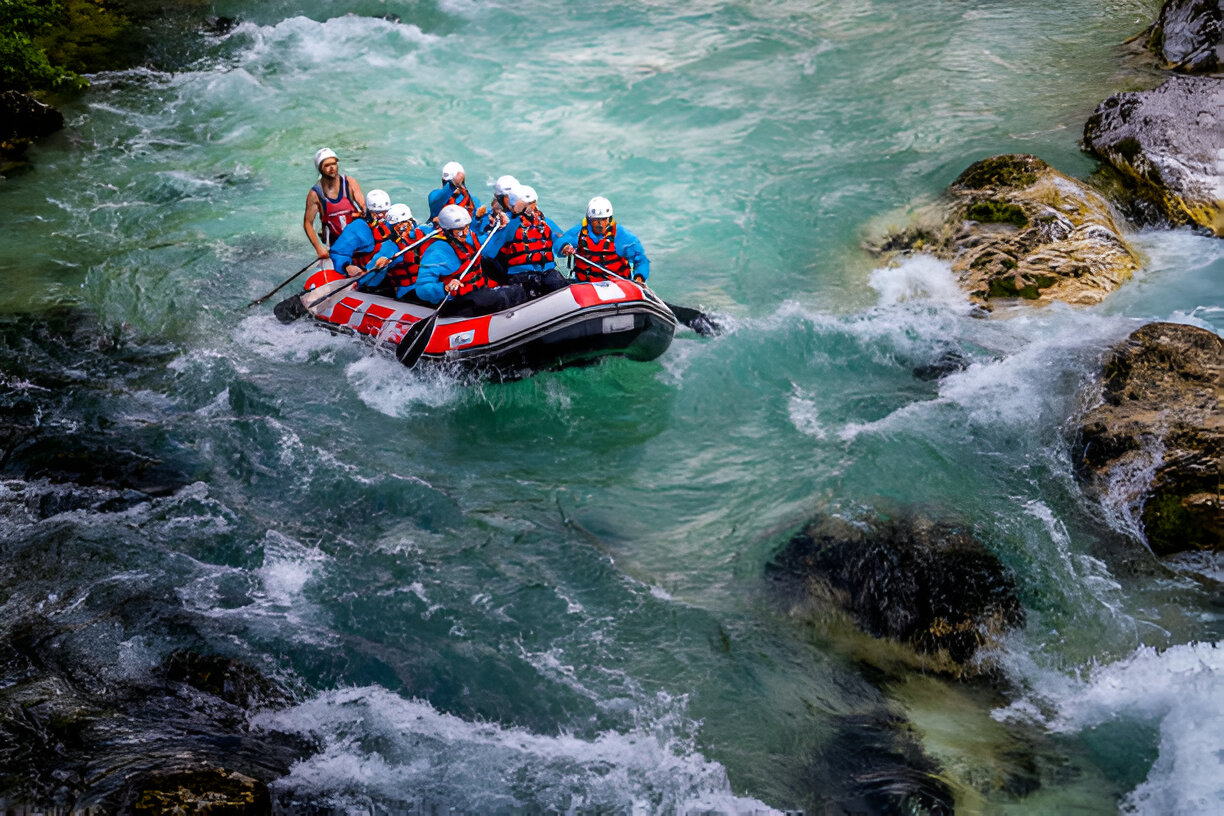
Of all the ways to experience Vjosa National Park, guided rafting is universally considered the most spectacular. Floating through the park on the river itself puts you at the heart of the wilderness — surrounded by canyon walls, wildlife, and untouched nature in every direction.
A rafting trip through Vjosa National Park with Vjosa Rafting Albania lasts 2 to 3 hours and covers some of the park’s most scenic stretches near the town of Permet. Expert local guides navigate through exciting rapids while sharing their knowledge of the river’s ecology and history.
Why rafting is the best Vjosa National Park experience:
- Access canyon sections that are impossible to reach on foot
- See the park from its most dramatic perspective — water level
- Combine adventure with nature immersion
- Guides share knowledge about the river’s ecology and conservation story
- Swim in natural pools that only rafters can reach
Trips are available daily at 10:00 AM and 3:00 PM, priced at €35 for adults and €30 for children. Book your Vjosa National Park rafting experience here.
Hiking Trails and Nature Walks in Vjosa National Park
For those who prefer to explore on foot, Vjosa National Park offers several hiking opportunities that showcase different aspects of the wild river landscape.
Lengarica Canyon Trail: A 2–3 hour round trip that follows a tributary of the Vjosa through a narrow, dramatic gorge. Expect to wade through shallow water, climb over rocks, and pass through passages where the canyon walls nearly meet overhead. Starting at the Benja Bridge, this trail is one of the most popular hikes in the park.
Riverside Trails: Gentler walking routes follow the banks of the Vjosa near Permet, offering views of the river’s turquoise waters and surrounding mountains. These are suitable for families and casual walkers.
Mountain Overlooks: For more ambitious hikers, trails ascend to viewpoints high above the river valley, providing breathtaking panoramas of Vjosa National Park stretching into the distance.
Conservation and Why Vjosa National Park Matters
Vjosa National Park is more than a beautiful destination — it is a symbol of what is possible when communities, governments, and environmental organizations work together to protect natural heritage.
A Model for River Conservation
Rivers across Europe have been heavily modified over the past century. Dams, channelization, and pollution have degraded most of the continent’s waterways. Vjosa National Park demonstrates that protecting free-flowing rivers is both possible and beneficial — generating sustainable tourism income that far outweighs the short-term gains of hydropower development.
Sustainable Tourism
The park’s management plan emphasizes sustainable tourism that benefits local communities while preserving the natural environment. Activities like rafting, hiking, and birdwatching have minimal environmental impact while creating jobs and income for the people of Permet and surrounding villages.
By visiting Vjosa National Park and participating in guided activities, you directly support the economic case for conservation — proving that wild rivers are more valuable alive than dammed.
How You Can Help
Every visitor to Vjosa National Park contributes to its protection by supporting the local tourism economy. You can also help by practicing responsible tourism — staying on marked trails, carrying out all waste, respecting wildlife, and sharing the park’s story with others.
How to Visit Vjosa National Park
Getting There
Vjosa National Park is best accessed through the town of Permet in southern Albania. Permet is approximately 4–5 hours by car from Tirana or 1.5 hours from Gjirokastër. The drive is scenic and passes through beautiful mountain landscapes.
When to Visit
The park is accessible year-round, but the best time for activities is April through October. Summer (June–August) offers the warmest weather and the widest range of activities. Spring and autumn provide cooler temperatures ideal for hiking and fewer crowds.
Where to Stay
Permet serves as the base for exploring Vjosa National Park. Accommodation ranges from family guesthouses (€20–€35/night) to comfortable hotels (€40–€70/night). Staying in Permet puts you within easy reach of the park’s best experiences.
Park Entry
There is currently no entrance fee for Vjosa National Park. The park is open to all visitors, though guided activities like rafting require booking with licensed operators.
Frequently Asked Questions About Vjosa National Park
Is Vjosa National Park free to visit?
Yes. There is no entrance fee. You can explore the park freely. Guided activities such as rafting are booked separately through local operators.
Can I camp in Vjosa National Park?
Camping regulations are evolving as the park’s management plan develops. Currently, wild camping is practiced by some visitors in designated areas. Check with local authorities for current rules.
Is the park suitable for children?
Yes. Many activities in Vjosa National Park — including rafting, thermal baths, easy hikes, and swimming — are family-friendly and enjoyed by visitors of all ages.
How was the Vjosa saved from dams?
A years-long international campaign by environmental organizations, local communities, and scientists convinced the Albanian government to declare the river a National Park in 2023, permanently blocking proposed hydropower projects.
What is the best way to experience Vjosa National Park?
Guided rafting is the most popular and immersive way to experience the park. A 2–3 hour trip takes you through the heart of the canyon with expert local guides. Book your trip here.
Experience Vjosa National Park Today
Vjosa National Park is a place unlike anywhere else in Europe — a last remnant of the continent’s wild river heritage, protected for future generations. Whether you come for the adventure, the nature, or the conservation story, this extraordinary park will leave a lasting impression.
Book your Vjosa National Park rafting adventure and see Europe’s last wild river for yourself. For more information, visit our contact page or browse our photo gallery.