Gjirokastër and the Vjosa Valley: UNESCO Old Town Meets Wild River (2026)
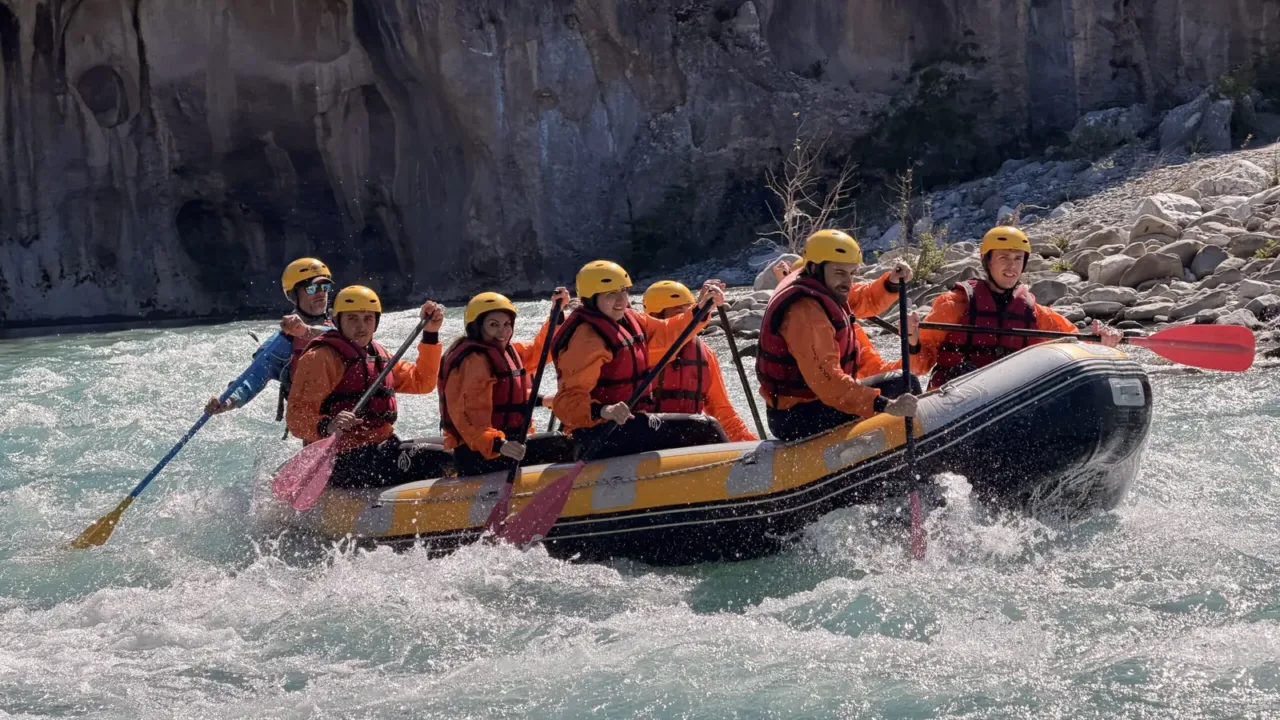
Southern Albania gives you two very different things within an hour of each other: a UNESCO-listed Ottoman town built in stone on a mountainside, and a wild river running free through a valley that has never been dammed. Gjirokastër and the Vjosa work far better together than either does alone.
Here is how to combine them, and why this pairing is the best two- or three-day block in the whole country.
Gjirokastër: The Stone City
Gjirokastër is a UNESCO World Heritage Site, listed for its remarkably preserved Ottoman-era architecture. The old town climbs a steep hillside in tiers of grey stone houses with slate roofs — the reason it is known as the Stone City. Streets are cobbled, steep, and hard on the ankles in the best possible way.
What to see
- Gjirokastër Castle — dominating the ridge above the town, with long views over the Drino valley, a weapons collection and a Cold War-era aircraft that has its own local legend.
- The Ottoman houses — several tower houses are open to visitors and show how a fortified family home worked, with defensive walls below and beautifully decorated living rooms above.
- The old bazaar — the heart of the old town, now full of craft shops, cafés and carpet weavers. Good for an afternoon rather than a rushed pass.
- The city views at dusk — the stone roofs catch the last light. Find a terrace and stay for it.
A day and a night is enough to see Gjirokastër properly without hurrying. Two nights if you like slow mornings.
The Vjosa Valley: The Wild Half
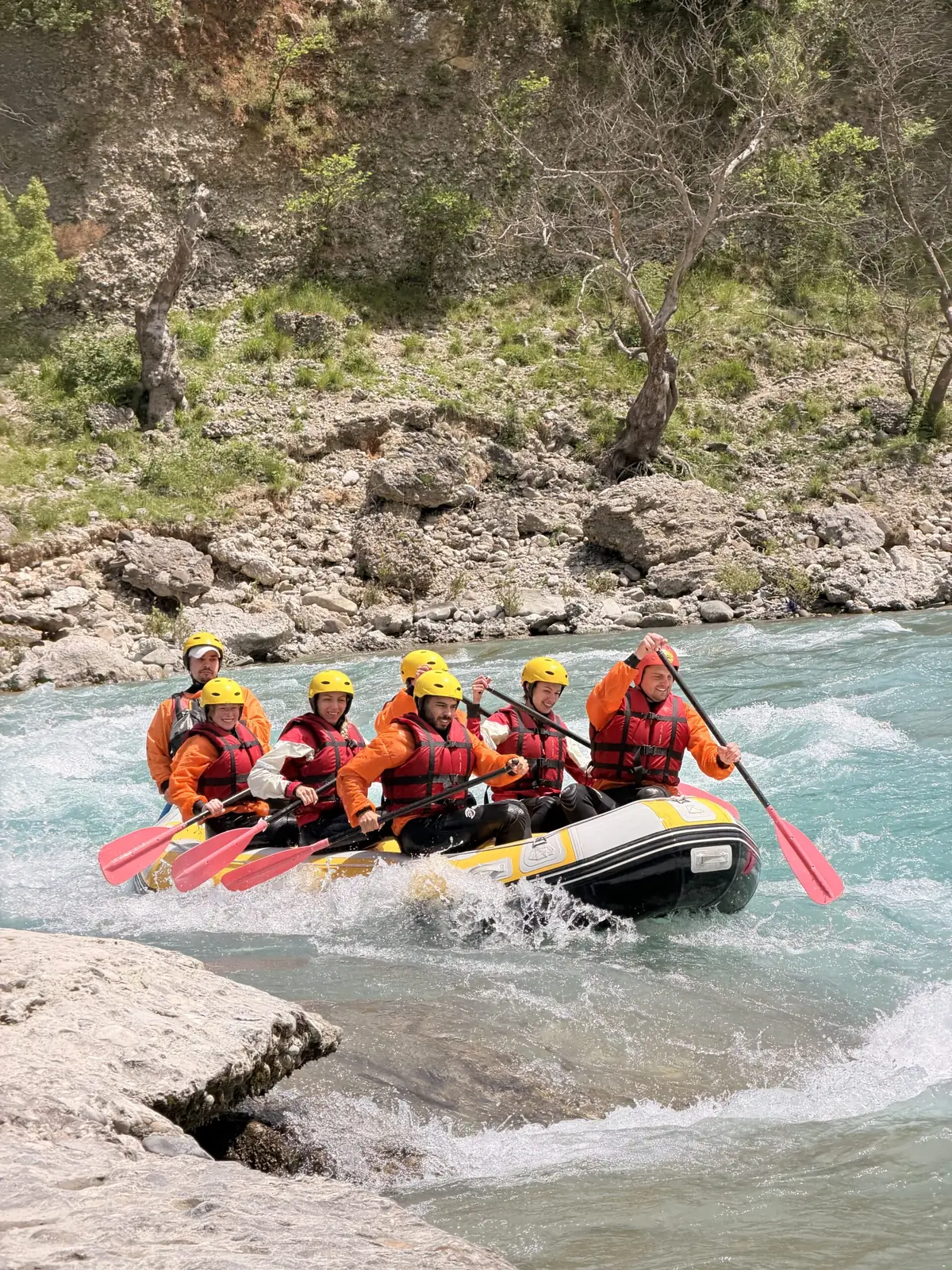
An hour or so east, the landscape changes completely. The Vjosa flows 272 kilometres from the Pindus mountains in Greece to the Adriatic without a single dam along its course — which is why it became Vjosa Wild River National Park in March 2023, the first national park in Europe created specifically to protect a wild river.
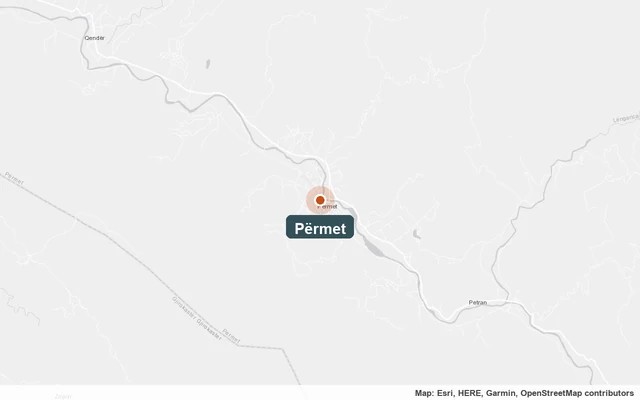
Where Gjirokastër is architecture and history, the Vjosa valley is water, gravel islands, canyons and hot springs. The base for it is Përmet, a small town on the riverbank with an outsized food reputation.
What to do
- Raft the Vjosa — the main event, suitable for complete beginners and running from spring to autumn.
- Bënjë thermal baths — free natural hot pools beside an Ottoman stone bridge, fifteen minutes from Përmet.
- Lengarica Canyon — a narrow limestone gorge you can walk in summer, right next to the baths.
- Eat — Përmet is known across Albania for its jams, compotes, wine and raki.
Why the Two Work Together
Most Albania itineraries run along the coast, which means a week of the same thing: beach, town, beach. Pairing Gjirokastër with the Vjosa gives you genuine contrast in a small geographic area.
| Gjirokastër | Vjosa valley | |
|---|---|---|
| Draw | UNESCO Ottoman architecture | Europe’s last wild river |
| Pace | Slow, cultural, walkable | Active, outdoors |
| Best time of day | Late afternoon and evening | Morning on the water |
| Stay | 1–2 nights | 2 nights |
They also solve each other’s weak points. Gjirokastër can feel hot and static in midsummer; the river fixes that. The Vjosa valley is light on formal sightseeing; Gjirokastër fixes that.
A Three-Day Plan
Day 1 — Gjirokastër
Arrive, walk the bazaar, climb to the castle for the valley view. Visit one Ottoman house museum. Dinner in the old town, and watch the light go off the stone roofs.
Day 2 — Drive to Përmet and raft
Leave after breakfast for the drive east — an hour or so through the Drino and Vjosa valleys. Raft in the afternoon, then dinner in Përmet. Order the gliko.
Day 3 — Canyon, hot springs, onward
Morning at Lengarica Canyon and the Bënjë thermal baths. Long lunch. Then continue — to the coast, north toward Berat and Tirana, or east across the border into Greece.
If you have longer, our 7-day Albania adventure itinerary extends this into a full week.
Getting Between Them
Gjirokastër to Përmet is roughly 60 kilometres, but allow an hour to an hour and a half — the road is paved and scenic, and it winds. Buses and furgons run the route, though a rental car gives you far more freedom for the sights outside Përmet.
Full details, including routes from Tirana, Sarandë and Greece, are in our guide to getting to Përmet and the Vjosa.
When to Go
May to early June and September to early October are the sweet spots. The river is in good condition, Gjirokastër’s stone streets are not baking, and the crowds that fill the Albanian coast in July and August have not made it inland.
Midsummer still works — it is simply hotter, and the river is lower and warmer, which many families prefer. See the best time to visit guide for the month-by-month detail.
The Best Two Days in Southern Albania
You can see a UNESCO Ottoman town in the morning and paddle a national park river the next. Very few countries offer that inside an hour’s drive, and fewer still without queues.
Ready to Add the Vjosa to Your Gjirokastër Trip?
We run guided rafting on the Vjosa from Përmet through the season — an easy add-on to any southern Albania itinerary. All equipment, safety briefing and river transport included.
Check availability and book your Vjosa rafting trip →
Booking with us
Secure checkout: card, PayPal or cash on arrival
- Instant confirmation By email and WhatsApp, as soon as you book.
- No experience needed Your guide handles the technical side.
- Certified local guides Swiftwater rescue and first aid trained.
- All equipment included Wetsuit, buoyancy aid, helmet and paddle.
- Free date changes Your booking stays valid for 365 days.
- Families welcome Children from age 3, in a correctly fitted buoyancy aid.
- Pay how you like Card or PayPal online, or cash on arrival.
Keep reading
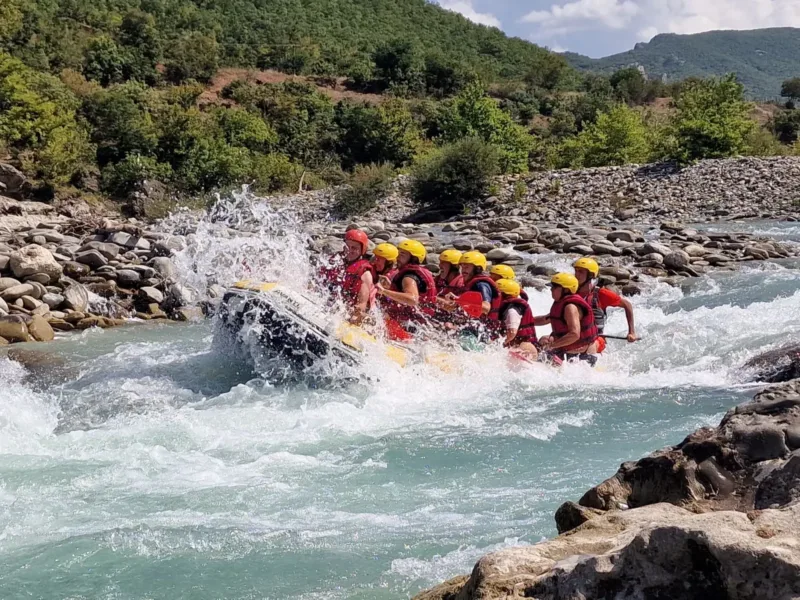
What to Wear Rafting on the Vjosa: Complete Packing Checklist (2026)
The single most common question we get before a trip is some version of “what do I actually wear?” It matters more…
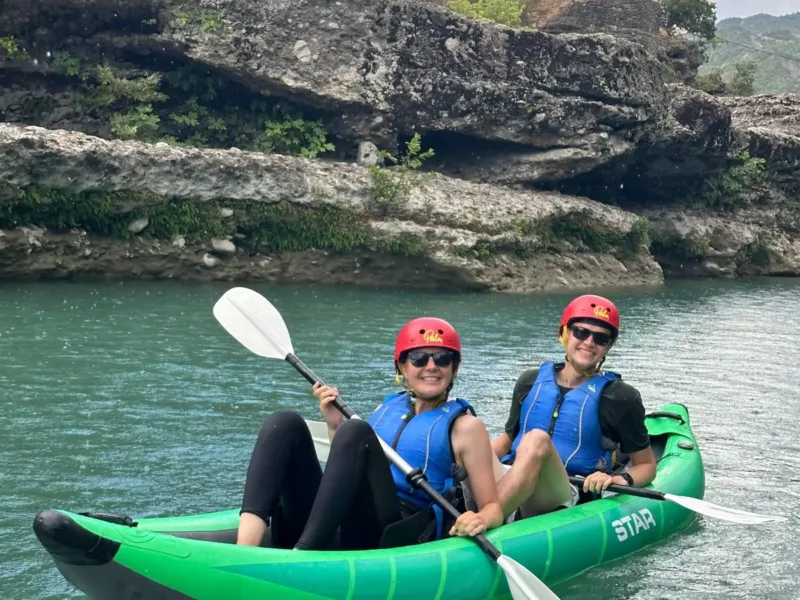
Kayaking the Vjosa River in Albania: Complete Guide (2026)
Rafting the Vjosa puts you in a boat with a guide and six other people. Kayaking puts you alone on the surface…
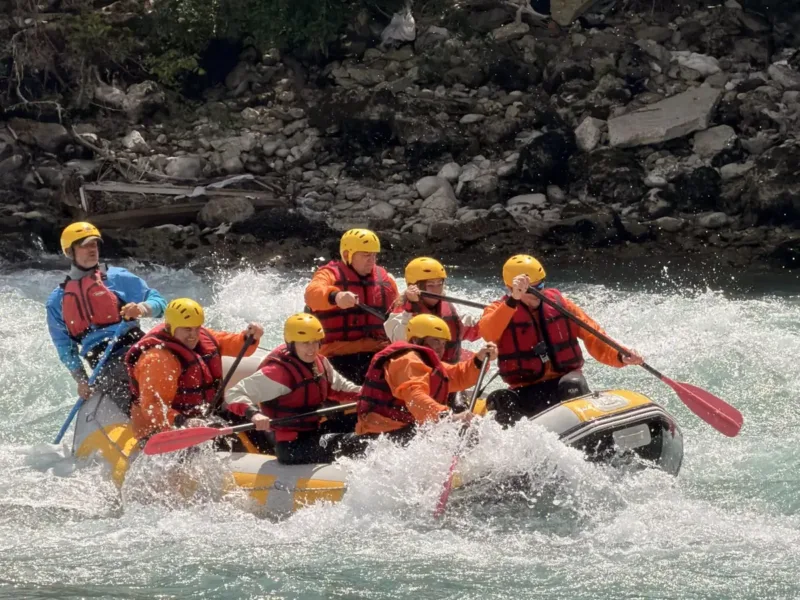
Përmet Travel Guide: Albania’s Slow-Food Town on the Vjosa (2026)
Most people arrive in Përmet because of the river. They leave talking about the jam. This small town in southern Albania sits…
Why book with us
- Certified guides Swiftwater rescue, first aid and risk management training.
- 7.6 km on the Vjosa Class II-III rapids on Europe's last free-flowing wild river.
- Daily departures 10:00 and 14:00, April to October.
- Free date and name changes Your booking stays valid for 365 days from your original trip date.