Is Albania Safe for Tourists? A Practical 2027 Guide
Short answer: yes, Albania is safe for most tourists. The UK government’s travel advice says that reports of crime targeting foreigners are rare. The bigger risks are practical ones: fast and unpredictable driving, poor rural roads at night, summer wildfires and water activities run without proper equipment. If you plan for those, your trip will be calm and easy.
We run guided rafting trips on the Vjosa river in Përmet, southern Albania, and we meet road trippers from the UK, Germany, Italy and the Netherlands every day of the season. Below is what we tell friends who ask us the same question.
What the official travel advice says
The best place to start is your own government’s advice. For British travellers, that is the GOV.UK Albania safety and security page. Read it before you book and again before you fly, because it is updated from time to time.
At the time of writing, the main points are:
- Crime: there is crime in some areas, but crime aimed at foreigners is rare. Watch for pickpockets in busy places, on buses and at airports.
- Roads: driving can be aggressive and erratic, and road deaths are among the highest in Europe. Rural roads can be poor and are not lit outside towns.
- Landmines: some remote areas near the northern border with Kosovo still have unexploded mines. Stay on marked paths there. This does not affect the south.
- Earthquakes: small tremors are common. Serious earthquakes are rare but do happen.
- Wildfires: they are common from April to October. Do not light fires outside safe, marked places.
- Water sports: use licensed operators, because some rented boats and jet skis on the coast may lack safety equipment.
- Emergency number: call 112.
Travellers from other countries should check their own foreign office as well. Germany, Italy and the Netherlands all publish similar pages.
Is Albania safe for solo travellers, couples and families?
For most visitors, everyday life in Albania feels relaxed. Albanians are known for hospitality, and in small towns like Përmet people will often help you find your way, even without a shared language. The normal city rules apply in Tirana, Durrës and Sarandë: keep your phone and wallet close in crowds, and use registered taxis late at night.
Families travel around Albania with children all the time. Food is simple and fresh, distances in the south are short, and many activities suit children. If you are coming with kids, our guida al rafting per famiglie explains what a river day looks like for them.
The real risk: driving
Most visitors hire a car, and the road is where you need the most care. Here is what helps:
- Drive in daylight on mountain and rural roads. Potholes, animals and unlit vehicles are hard to see at night.
- Plan shorter days. Google Maps times can be too optimistic on mountain roads. Add extra time.
- Stay calm with other drivers. The UK advice says small disputes can turn serious. Let fast drivers pass.
- If you have an accident, even a small one, stay at the scene until the police arrive.
- Bring the right papers. UK drivers should carry a 1968 international driving permit with their licence, plus a green card (proof of insurance) if you bring your own car.
We wrote a full guide with more tips for the roads in the south: Driving in Albania: road trip tips for the Vjosa valley.
Is it safe in the water?
Albania has a long coast and many rivers, and water activities are one of the best parts of a trip. The safety level depends on who runs them. The UK advice warns about rented boats and jet skis without proper equipment, and it recommends licensed water sports centres.
Before you book any water activity, ask these questions:
- Does every guest get a helmet and a life jacket that fits?
- Are the guides trained in rescue and first aid?
- Is there a safety briefing before you start?
- What happens if the water level or weather is not safe?
How we run rafting on the Vjosa
Here is how we answer those questions on our own trips in Përmet:
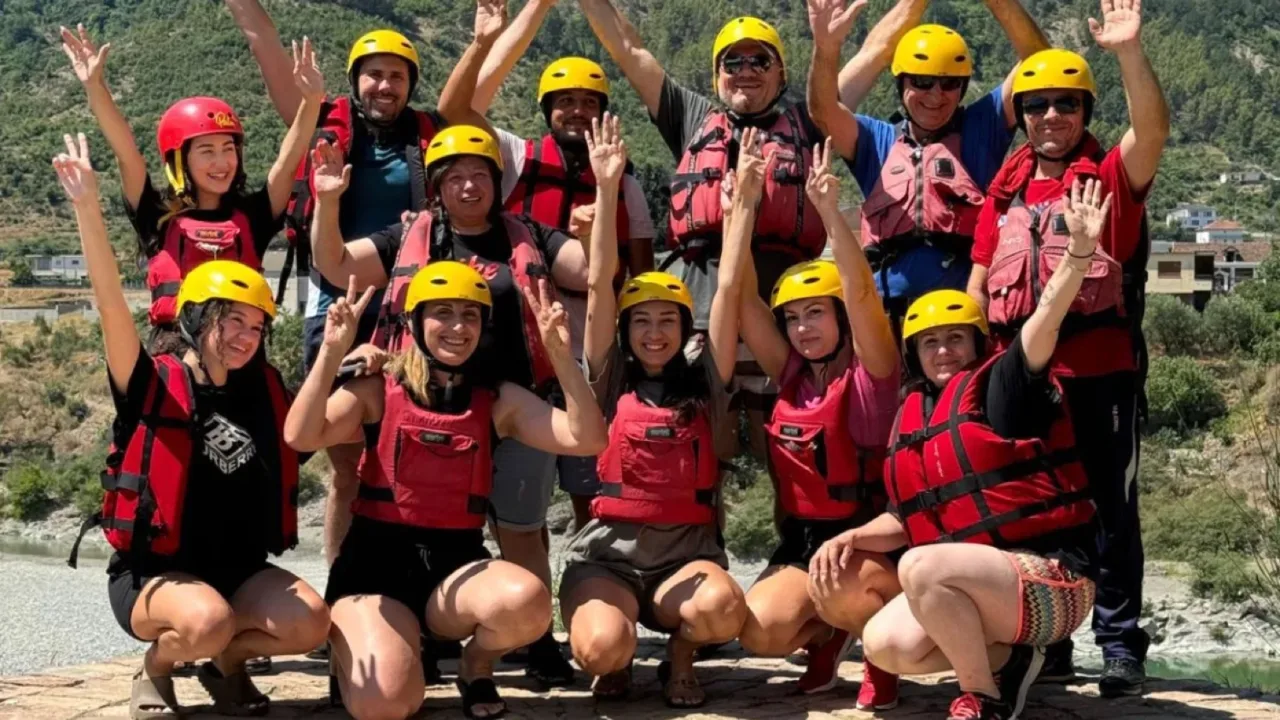
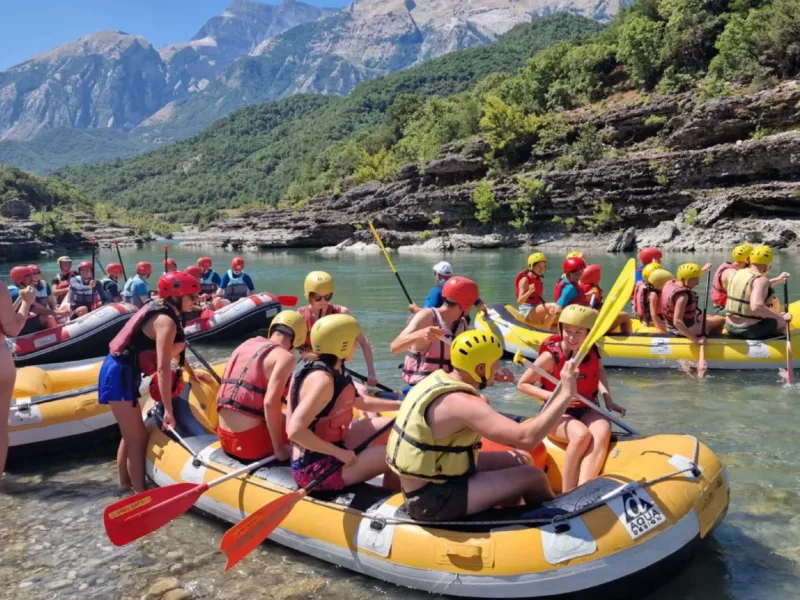
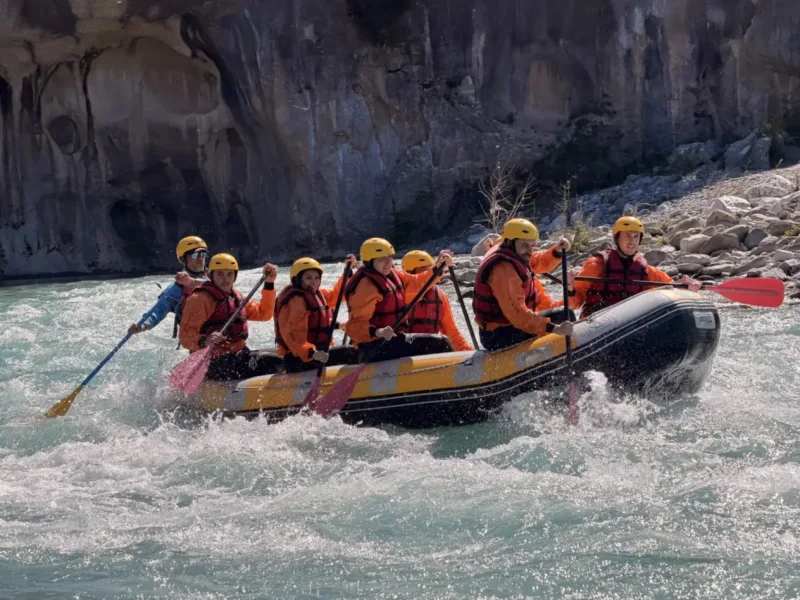
- Every guest gets a CE-certified whitewater helmet, a life jacket sized to their weight, a 3mm wetsuit, neoprene booties and a paddle.
- Our guides hold whitewater guide certifications and train in swiftwater rescue, first aid and reading river hazards.
- Every trip starts with a safety briefing in English and Albanian: how to paddle, the commands, and what to do if you fall in.
- The route has Class II and Class III rapids. That means real waves and fun, but suitable for first-timers. You do not need to be a strong swimmer. Basic confidence in water is enough.
- If river or weather conditions are not safe, we move you to another time free of charge, or refund you in full.
You can read every detail on our safety and equipment page.
Safety checklist for your Albania trip
| Before you go | During the trip |
|---|---|
| Read your government’s travel advice | Drive mountain roads in daylight |
| Get travel insurance that covers outdoor activities | Keep valuables out of sight in busy places |
| UK drivers: get a 1968 international driving permit | Save 112 in your phone |
| Download offline maps for mountain areas | Book water activities with trained, equipped guides |
| Carry some cash for small towns | Take care with fire in dry months |
Southern Albania: a quiet place to slow down
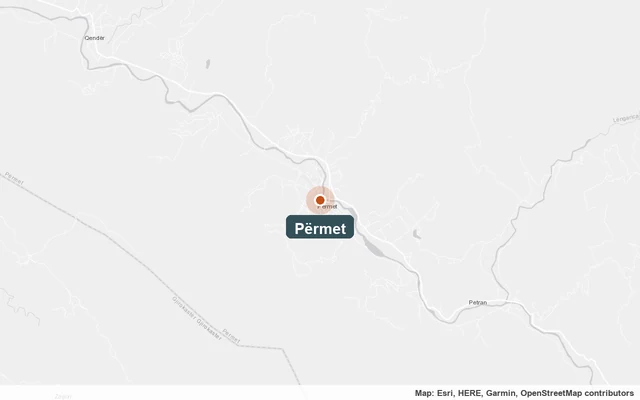
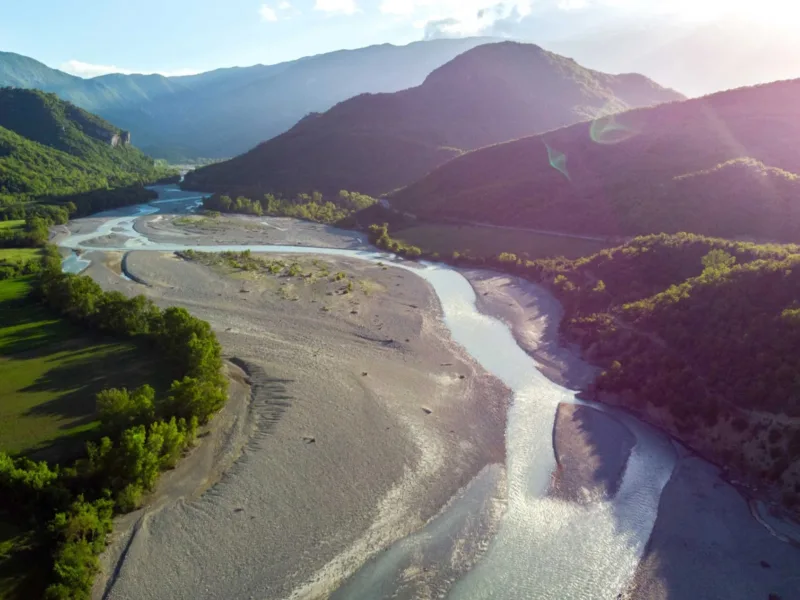
Many visitors tell us the busy coast in July and August is the most stressful part of their trip, because of traffic and crowds. Inland, it is a different country. Përmet is a small town on the Vjosa, Europe’s last wild river, which is now protected as a National Park. Mornings are quiet, food is local, and the drive from Gjirokastër takes about 1.5 hours.
Nearby you can walk to the Terme di Benja and the Lengarica canyon. Our Përmet travel guide has more ideas for a day or two in the area.
FAQ
Is Albania safe to visit in 2027?
For most travellers, yes. Crime against tourists is rare. Check your government’s travel advice before you go, since it can change, and take extra care on the roads.
Is it safe to drive in Albania?
It is possible and very common, but you need to drive carefully. Roads can be poor in rural areas, local driving can be fast, and there are no street lights outside towns. Drive in daylight and plan extra time.
Is tap water safe to drink in Albania?
Advice differs by town, so most visitors drink bottled water. Ask your host what locals do.
Is rafting in Albania safe for beginners?
Yes, if you go with a trained team and full equipment. Our Vjosa trip has Class II and III rapids, a safety briefing before every trip, and guides trained in rescue and first aid. Beginners and families are welcome.
What is the emergency number in Albania?
Call 112 for emergency services.
Plan a safe river day in Përmet
If you want one day on your road trip that is active but well organised, join us on the Vjosa. Trips run daily at 10:00 and 14:00 from April to October, with all equipment and a guide included. See our prices, poi book your date online. Questions first? Send us a WhatsApp on +355 67 49 63 486.
Booking with us
Secure checkout: card, PayPal or cash on arrival
- Conferma immediata By email and WhatsApp, as soon as you book.
- No experience needed Your guide handles the technical side.
- Certified local guides Swiftwater rescue and first aid trained.
- All equipment included Wetsuit, buoyancy aid, helmet and paddle.
- Free date changes Your booking stays valid for 365 days.
- Families welcome Children from age 3, in a correctly fitted buoyancy aid.
- Pay how you like Card or PayPal online, or cash on arrival.
Keep reading
Albania with Kids: A Practical Family Trip Guide
Thinking about Albania with kids? Here are the best family stops in the south, a 7-day plan with short drives, and what…
Campervan Albania: Routes, Camping and the Vjosa Valley
Planning Albania by campervan? Here is how to get in, which roads suit a van, where to camp near Përmet and how…
Albania Road Trip: A 7-Day Southern Route by Car
A simple 7-day Albania road trip through the south: Berat, Përmet, Gjirokastër, Ksamil and the Riviera. Drive times, a day-by-day plan and…
Why book with us
- Certified guides Swiftwater rescue, first aid and risk management training.
- 7.6 km on the Vjosa Class II-III rapids on Europe's last free-flowing wild river.
- Daily departures 10:00 and 14:00, April to October.
- Free date and name changes Your booking stays valid for 365 days from your original trip date.