Vjosa River: Where It Flows and How to See It
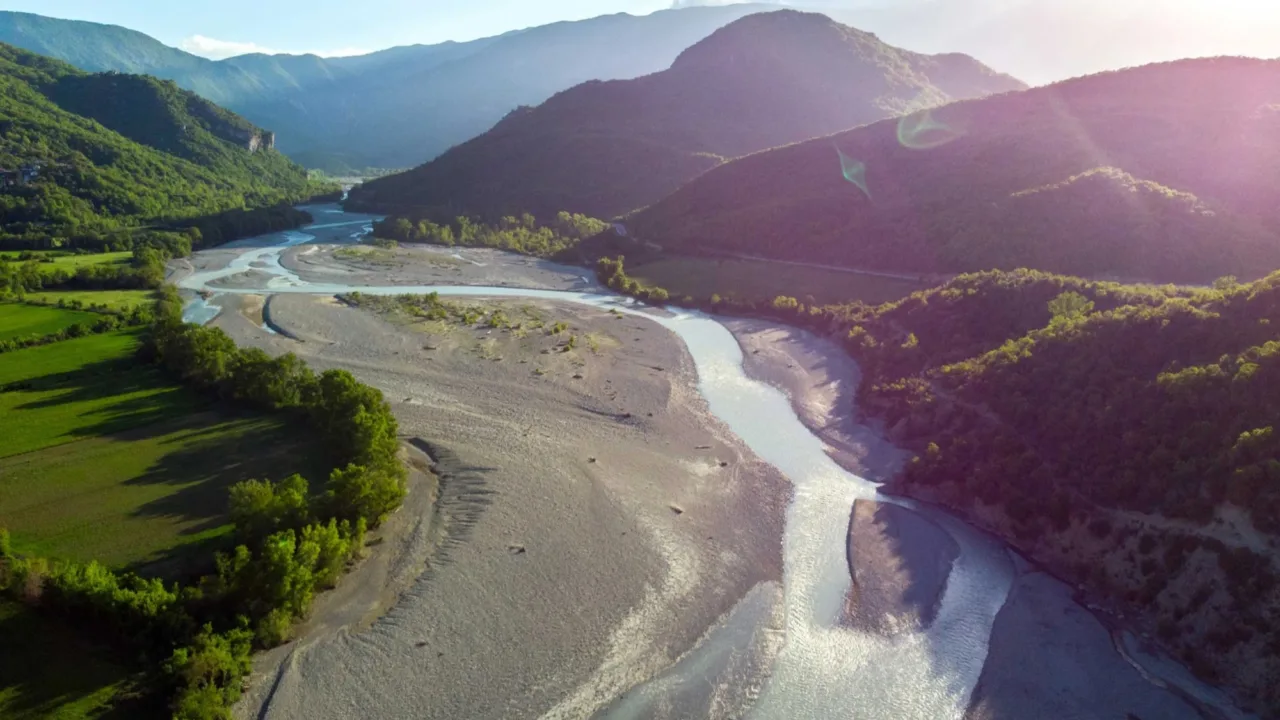
Short answer: the Vjosa is a river about 272 km long. It starts in the Pindus mountains of Greece, where it is called the Aoös, and flows north-west through southern Albania to the Adriatic Sea near Vlorë. About 80 km are in Greece and 192 km in Albania. In March 2023 Albania made the Vjosa a national park, the first protected wild river national park in Europe. The best places to see it are Përmet, the Këlcyrë gorge, Tepelenë and the lagoon area near its mouth.
Vjosa river facts at a glance
| Fact | Dettaglio |
|---|---|
| Total length | About 272 km (some studies give about 260 km) |
| In Greece | About 80 km, under the name Aoös |
| In Albania | About 192 km |
| Source | Pindus mountains, Epirus, Greece |
| Mouth | Adriatic Sea, north-west of Vlorë |
| Main tributaries | Voidomatis, Sarantaporos, Drino, Shushicë |
| Basin area | About 6,706 km² |
| Protection | Vjosa Wild River National Park, declared March 2023 |
Figures are from public geographic sources such as Wikipedia. Different studies measure the river in slightly different ways, so treat them as close estimates.
The route of the Vjosa, from mountains to sea
In Greece: the Aoös
The river rises high in the Pindus mountains of Epirus, near the village of Vovousa. Near its source there is a reservoir with a hydropower dam, in use since 1987. Below it, the river cuts through the deep gorges of Vikos-Aoös National Park and passes the town of Konitsa, where the Voidomatis river joins it.
Crossing into Albania
The river enters Albania in the south-east, where the Sarantaporos joins it on the border. From here it is called the Vjosa. It turns north-west and flows into the wide valley of Përmet.
Përmet and the Këlcyrë gorge
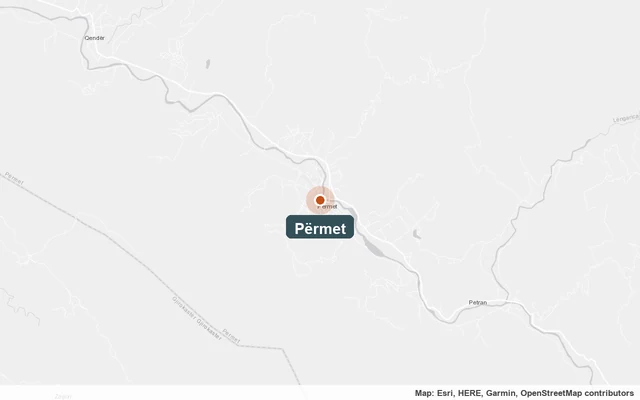
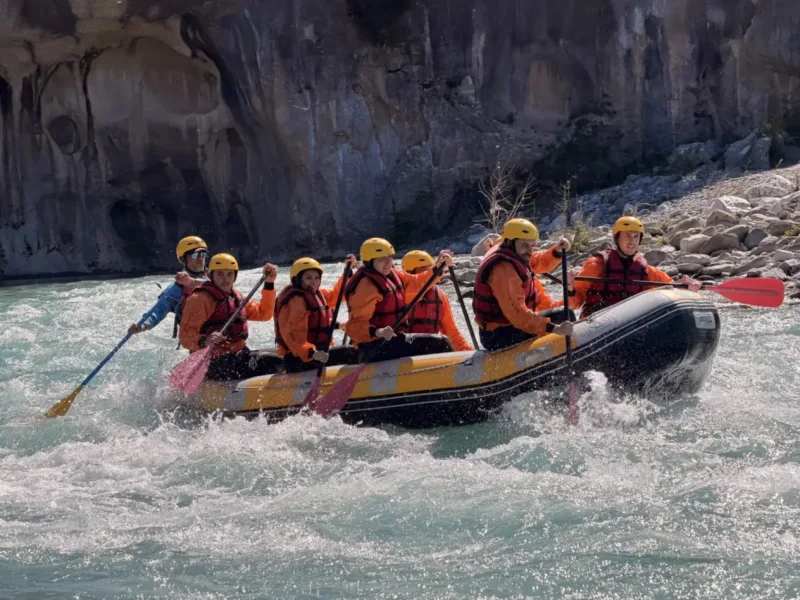
Përmet is the first sizeable town on the Albanian Vjosa. The river is clear and turquoise here, with gravel banks and steady rapids. This is where we run our rafting trips. Close to Përmet, the Lengarica river joins the Vjosa after passing through its own canyon and the warm Bënja springs.
Downstream from Përmet, the river squeezes through the narrow Këlcyrë gorge. The main road follows it, so many travellers see this part of the river from the car on the way from Tirana.
Tepelenë to the sea
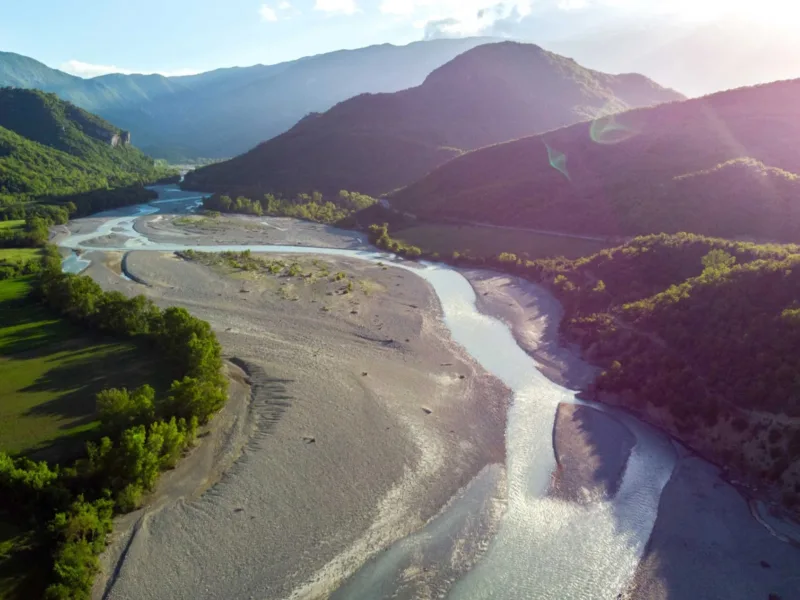
At Tepelenë the Drino, the Vjosa’s largest tributary, joins from the Gjirokastër valley. The river then passes Memaliaj and Selenicë and spreads into wide, braided channels across the plain. It reaches the Adriatic north-west of Vlorë, inside the Vjosa-Narta Protected Landscape, an area of lagoon and wetland.
Why people call the Vjosa a wild river
Most large rivers in Europe have been changed by dams, channels or gravel mining. In Albania, the Vjosa still moves freely. It floods, carries gravel, builds new islands and changes its channels every year. This natural movement creates homes for many fish, birds, insects and plants.
For years, plans for hydropower dams threatened the river. Local people, Albanian groups like EcoAlbania, scientists and international partners campaigned against them. In June 2022 the Albanian government signed a commitment with the outdoor company Patagonia to create a national park, and in March 2023 the Vjosa Wild River National Park was declared. It has IUCN Category II status, which is the international category for national parks. You can read the story on EcoAlbania’s website, and see satellite images of the river on NASA Earth Observatory.
Our Vjosa National Park visitor guide explains the park, its wildlife and what you can do there.
Best places to see the Vjosa in Albania
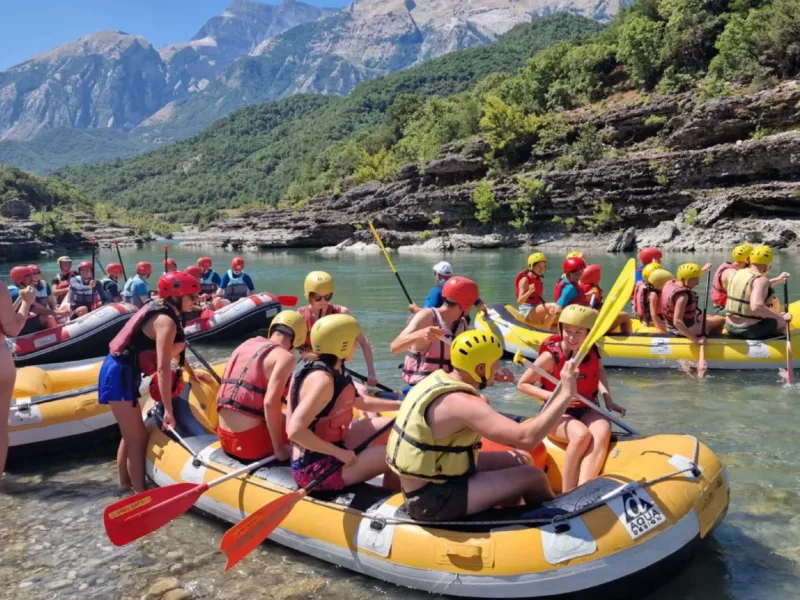
- Përmet, on the water. The best way to see the Vjosa is from a raft. Our trip covers 7.6 km of the river near Përmet, with Class II to III rapids (easy to moderate). See the full river route.
- Përmet, on foot. Walk along the riverside in town in the evening, when the light turns the mountains gold.
- Bënja and Lengarica. See a wild Vjosa tributary up close, swim in the warm pools and walk into the canyon. Our Bënja thermal baths guide has the details.
- The Këlcyrë gorge. Stop at a safe, wide pull-out to look down into the gorge.
- Tepelenë. Watch where the Drino meets the Vjosa.
- Near Vlorë. Visit the lower river and the Narta lagoon area at the end of your trip on the coast.
How to visit the Vjosa responsibly
- Take all your rubbish with you, including food waste.
- Do not drive on gravel banks or into the riverbed.
- Use river guides who know the water and follow safety rules.
- Do not build stone towers or move rocks in the river. Small animals live under them.
- Swim only in calm, shallow places. The current can be strong, even when the water looks slow.
When is the best time to visit the Vjosa?
For rafting, the season runs from April to October. Spring brings more water and lively rapids. Summer has warm days and clear, turquoise water. September and October are quieter, with softer light. Our guide to the best time to visit Albania for rafting compares each month.
Frequently asked questions
Where does the Vjosa river start?
In the Pindus mountains of Epirus, in north-west Greece, near the village of Vovousa. In Greece it is called the Aoös.
Where does the Vjosa river end?
It flows into the Adriatic Sea north-west of Vlorë, in Albania, inside the Vjosa-Narta Protected Landscape.
Is the Vjosa the same river as the Aoös?
Yes. Aoös is the Greek name for the upper river. After it crosses into Albania it is called the Vjosa.
Can you go rafting on the Vjosa?
Yes. Guided rafting runs from Përmet every day at 10:00 and 14:00 from April to October. Beginners and families are welcome, and guides are trained in swift-water rescue and first aid.
Is the Vjosa a national park?
Yes. The Vjosa Wild River National Park was declared in March 2023 and has IUCN Category II status.
See the Vjosa from the water
Reading about a wild river is good. Paddling it is better. Our guided trips from Përmet cost €35 per adult and €30 per child, and include a wetsuit, helmet, life jacket, paddle, guide and safety briefing. Learn more on our Vjosa river rafting page or book your date online with instant confirmation and free date changes for 365 days.
Booking with us
Secure checkout: card, PayPal or cash on arrival
- Conferma immediata By email and WhatsApp, as soon as you book.
- No experience needed Your guide handles the technical side.
- Certified local guides Swiftwater rescue and first aid trained.
- All equipment included Wetsuit, buoyancy aid, helmet and paddle.
- Free date changes Your booking stays valid for 365 days.
- Families welcome Children from age 3, in a correctly fitted buoyancy aid.
- Pay how you like Card or PayPal online, or cash on arrival.
Keep reading
Albania with Kids: A Practical Family Trip Guide
Thinking about Albania with kids? Here are the best family stops in the south, a 7-day plan with short drives, and what…
Campervan Albania: Routes, Camping and the Vjosa Valley
Planning Albania by campervan? Here is how to get in, which roads suit a van, where to camp near Përmet and how…
Albania Road Trip: A 7-Day Southern Route by Car
A simple 7-day Albania road trip through the south: Berat, Përmet, Gjirokastër, Ksamil and the Riviera. Drive times, a day-by-day plan and…
Why book with us
- Certified guides Swiftwater rescue, first aid and risk management training.
- 7.6 km on the Vjosa Class II-III rapids on Europe's last free-flowing wild river.
- Daily departures 10:00 and 14:00, April to October.
- Free date and name changes Your booking stays valid for 365 days from your original trip date.